
actively

actively

learning™

learning™

curriculum

curriculum

Our Actively Learning™ curriculum is a research-backed, thoughtfully designed program that includes daily, age-appropriate sports and movement activities. These not only support children’s physical development, but also build confidence, foster creativity, and nurture physical literacy to keep little bodies moving and little minds growing.

EYLF play-based
learning

sport (active
learning)

why sport and motion matter for kids

why sport and motion matter for kids

why sport and motion matter for kids

Scientific research shows that staying active benefits children well beyond the field. It not only builds strong bodies but also strengthens brains, supports social connections, and sets them up for long-term success.

physical
benefits

benefits

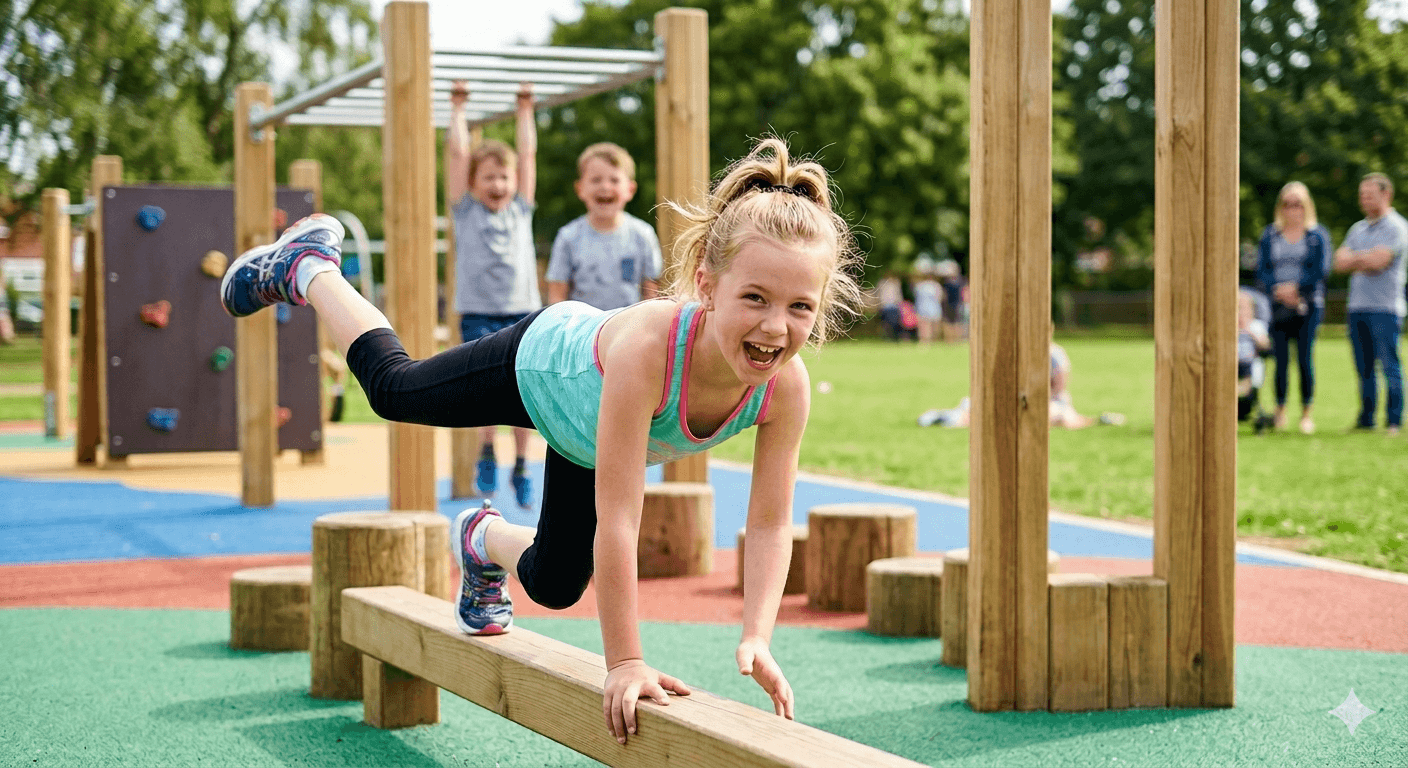
Sport boosts children’s fitness through fun, whole-body play that builds skills and confidence. It sets the foundation for strong, healthy, active lives:

Perform better in school

Feel more confident and resilient

Think more creatively

Experience less stress and anxiety

  • Academic Advantages

    Active kids sharpen their focus, boost memory, and achieve up to 40% higher test scores. They also tend to attend school more consistently, helping them learn more and reach their full academic potential.

  • Mental and Emotional Wellbeing

    Playing sports is a natural mood booster. It reduces stress, quiets anxiety, and builds confidence. Through teamwork and overcoming challenges, children also develop emotional resilience and coping skills that support them.

  • Social Skills Development

    Team sports act as social classrooms, teaching cooperation, empathy, communication, and leadership. Kids learn to support peers, celebrate successes together, and form lasting friendships

  • Lifelong Impact

    Starting sports young sets children up for a lifetime of healthy habits. The confidence, resilience, and skills they gain stay with them, encouraging ongoing activity, stronger community connections, and positive wellbeing into adulthood.

  • Academic Advantages

    Active kids sharpen their focus, boost memory, and achieve up to 40% higher test scores. They also tend to attend school more consistently, helping them learn more and reach their full academic potential.

  • Mental and Emotional Wellbeing

    Playing sports is a natural mood booster. It reduces stress, quiets anxiety, and builds confidence. Through teamwork and overcoming challenges, children also develop emotional resilience and coping skills that support them.

  • Social Skills Development

    Team sports act as social classrooms, teaching cooperation, empathy, communication, and leadership. Kids learn to support peers, celebrate successes together, and form lasting friendships

  • Lifelong Impact

    Starting sports young sets children up for a lifetime of healthy habits. The confidence, resilience, and skills they gain stay with them, encouraging ongoing activity, stronger community connections, and positive wellbeing into adulthood.

  • Academic Advantages

    Active kids sharpen their focus, boost memory, and achieve up to 40% higher test scores. They also tend to attend school more consistently, helping them learn more and reach their full academic potential.

  • Mental and Emotional Wellbeing

    Playing sports is a natural mood booster. It reduces stress, quiets anxiety, and builds confidence. Through teamwork and overcoming challenges, children also develop emotional resilience and coping skills that support them.

  • Social Skills Development

    Team sports act as social classrooms, teaching cooperation, empathy, communication, and leadership. Kids learn to support peers, celebrate successes together, and form lasting friendships

  • Lifelong Impact

    Starting sports young sets children up for a lifetime of healthy habits. The confidence, resilience, and skills they gain stay with them, encouraging ongoing activity, stronger community connections, and positive wellbeing into adulthood.

  • Academic Advantages

    Active kids sharpen their focus, boost memory, and achieve up to 40% higher test scores. They also tend to attend school more consistently, helping them learn more and reach their full academic potential.

  • Mental and Emotional Wellbeing

    Playing sports is a natural mood booster. It reduces stress, quiets anxiety, and builds confidence. Through teamwork and overcoming challenges, children also develop emotional resilience and coping skills that support them.

  • Social Skills Development

    Team sports act as social classrooms, teaching cooperation, empathy, communication, and leadership. Kids learn to support peers, celebrate successes together, and form lasting friendships

  • Lifelong Impact

    Starting sports young sets children up for a lifetime of healthy habits. The confidence, resilience, and skills they gain stay with them, encouraging ongoing activity, stronger community connections, and positive wellbeing into adulthood.

At Active Learners, we believe active learning is the foundation for lifelong success. That’s why our curriculum goes beyond EYLF, combining early education with sporting expertise.

powerful learning

the

result?

Active play fires up the body and sparks the brain! Kids who move regularly tend to

Perform better in school

Feel more confident and resilient

Think more creatively

Experience less stress and anxiety

what is physical literacy?

what is physical literacy?

what is physical literacy?

what is physical literacy?

According to the Australian Sports Commission, physical literacy provides:

Physical skills and fitness

The attitudes and emotions that motivate children to be active

The knowledge and understanding of how, why and when to move

The social skills to be active with others

24 Hour Movement Guideline

only

three

things

Australia's guidelines for healthy growth in the first five years — built around three things every child needs every 24 hours.

Australia's guidelines for healthy growth in the first five years — built around three things every child needs every 24 hours.

Move

Active play, every day

Sit

Less, and never for long

Sleep

Restful, restorative, regular.

For babies, toddlers & pre-schoolers · Australian Dept. of Health
For babies, toddlers & pre-schoolers ·
Australian Dept. of Health

foundation for lifelong activity

foundation for lifelong activity

foundation for lifelong activity

Put simply, physical literacy is the foundation for lifelong activity, health, and wellbeing. At Active Learners, we embed physical literacy into every part of our curriculum so children don’t just learn to play – they learn to move with confidence, joy, and purpose.

Watch how the Australian Government is championing physical literacy for Australian children.

our starting line-up

our starting line-up

our starting line-up

Children explore a variety of sports that develop whole-body skills while keeping play fun and engaging:

SOCCER

Foot-eye coordination, balance, and spatial awareness through dribbling, stopping, and passing.

SOCCER

Foot-eye coordination, balance, and spatial awareness through dribbling, stopping, and passing.

RUGBY

Running, dodging, safe tagging, and teamwork through non-contact play.

RUGBY

Running, dodging, safe tagging, and teamwork through non-contact play.

CRICKET

Foot-eye coordination, balance, and spatial awareness through dribbling, stopping, and passing.

CRICKET

Foot-eye coordination, balance, and spatial awareness through dribbling, stopping, and passing.

BASKETBALL

Hand-eye coordination, passing, and movement in space with confidence.

BASKETBALL

Hand-eye coordination, passing, and movement in space with confidence.

GYMNASTICS

Balance, flexibility, and core strength through rolling, jumping, and balancing.

GYMNASTICS

Balance, flexibility, and core strength through rolling, jumping, and balancing.

TENNIS

Racket handling, striking, and timing tailored for little hands.

TENNIS

Racket handling, striking, and timing tailored for little hands.

ATHLETICS

Running, jumping, throwing, and mini sprints to build whole-body strength.

ATHLETICS

Running, jumping, throwing, and mini sprints to build whole-body strength.

NETBALL

Running, jumping, throwing, and mini sprints to build whole-body strength.

NETBALL

Running, jumping, throwing, and mini sprints to build whole-body strength.

SWIMMING

Water confidence, strokes, breath control, and safety awareness.

SWIMMING

Water confidence, strokes, breath control, and safety awareness.

References

"Developing life skills through sports", Health direct

"Sticking with sport during school years linked to academic success", University of Sydney, 2024

Owen, K., "Sport Participation for Academic Success", Human Kinetics Journals, 2023

Eime, R., et al., "A systematic review of the psychological and social benefits of participation in sport", Int. J. of Behavioral Nutrition and Physical Activity, 2013

Whitley, M., "PCSFN Science Board Report on Youth Sports", 2020

Raisingchildren.net.au, "Sport: encouraging children to have a positive attitude"

Raisingchildren.net.au, "Physical activity: getting children involved", 2023

AIHW, "Australia's children; Physical Activity", 2023

quick

enquiry

Pop your details in and we’ll be in touch soon.

quick

enquiry

Pop your details in and we’ll be in touch soon.

"Childcare • education • sport"

Nurturing a child to their fullest potential is at the hearth of what we do.

2026 Active Learners © All rights reserved.

"Childcare • education • sport"

Nurturing a child to their fullest potential is at the hearth of what we do.

2026 Active Learners © All rights reserved.

"Childcare • education • sport"

Nurturing a child to their fullest potential is at the hearth of what we do.

2026 Active Learners © All rights reserved.